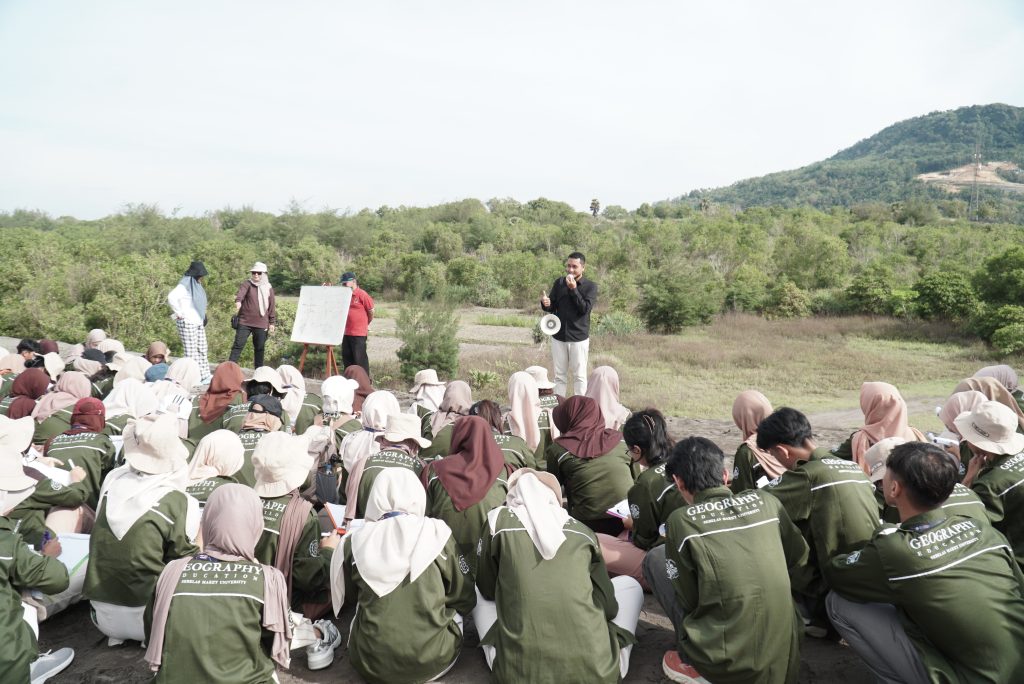
Surakarta, December 11, 2025 – Geography Education students from the Faculty of Teacher Training and Education (FKIP) at Sebelas Maret University (UNS) successfully held a field activity for the course “Field Work Lecture 1” entitled “Introduction to Landforms and Cultural Landscapes.” The activity took place from November 4 to 10, 2025, and provided in-depth practical experience regarding landforms and cultural landscapes in Indonesia, particularly Central Java, Yogyakarta, and Karimunjawa Island.
The activity was attended by all 2024 cohort students and was accompanied by UNS Geography Education lecturers. This field experience was designed to introduce students to various geographical phenomena, including geology, ecosystems, and culture along their journey.
During six days of field-based academic activities, participants visited 19 designated study sites that served as key locations for thematic geographical and environmental analysis. The following section presents a systematic description of each site and its academic focus:
- Bukit Tenong, Wonogiri – This site facilitated the analysis of geological formations and land-use patterns within a hilly geomorphological setting.
- Museum Kars Wonogiri – The visit emphasized the significance of karst landscapes in geological studies as well as their relationship with local cultural heritage.
- Geopark Ngingrong – Academic activities at this geopark focused on natural resource management strategies and principles of environmental conservation.
- Oceanographic Study at Pantai Parangkusumo and Sand Dune Parangtritis – This session examined coastal–marine interactions, including wave dynamics, sediment transport, and the formation processes of aeolian sand dunes.
- Confluence of Sungai Opak and Sungai Oyo – The study concentrated on hydrological processes and fluvial dynamics occurring at the meeting point of Sungai Opak and Sungai Oyo.
- Rawa Pening – This location served as a case study for understanding alluvial landscapes, wetland ecosystems, and their relevance to regional tourism development.
- Sayung Study Area – Field observations addressed coastal landform characteristics and assessed the impacts of climate change on coastal environments.
- Bendung Gerak – The site provided insights into anthropogenic engineering interventions in water resource regulation and management.
- Pantai Bandengan – Academic discussions focused on marine and coastal processes along the northern coast of Java.
- Mangrove Study at Taman Nasional Karimunjawa – This site enabled students to examine mangrove ecosystems and their ecological functions in maintaining coastal stability.
- Bukit Cinta Karimunjawa – The analysis at this location explored landscape aesthetics and their influence on local socio-cultural practices.
- Terumbu Karang Karimunjawa – Students conducted studies on coral reef ecosystems, emphasizing biodiversity and marine conservation issues in the Karimunjawa region.
- Tanjung Gelam – Field observations were directed toward identifying coastal geological features and processes at Tanjung Gelam.
- Museum Jenang – This visit enhanced students’ understanding of local cultural heritage and the economic significance of jenang as a distinctive product of Kudus.
- Masjid Al-Aqsha Kudus – Observations focused on local architectural characteristics and the influence of Islamic culture on regional spatial development.
- Simpang 7 Kudus – The site supported analysis of urban spatial utilization and the socio-economic dynamics of the surrounding community.
- Karst Sukolilo Pati – Students examined karst landforms and evaluated their potential for sustainable tourism development.
- Tambak Garam Desa Jono – This location provided academic insights into traditional salt-farming systems with unique inland environmental characteristics.
- Sangiran – At this prehistoric site, students studied hill formations containing mollusk fossils within specific stratigraphic horizon layers.
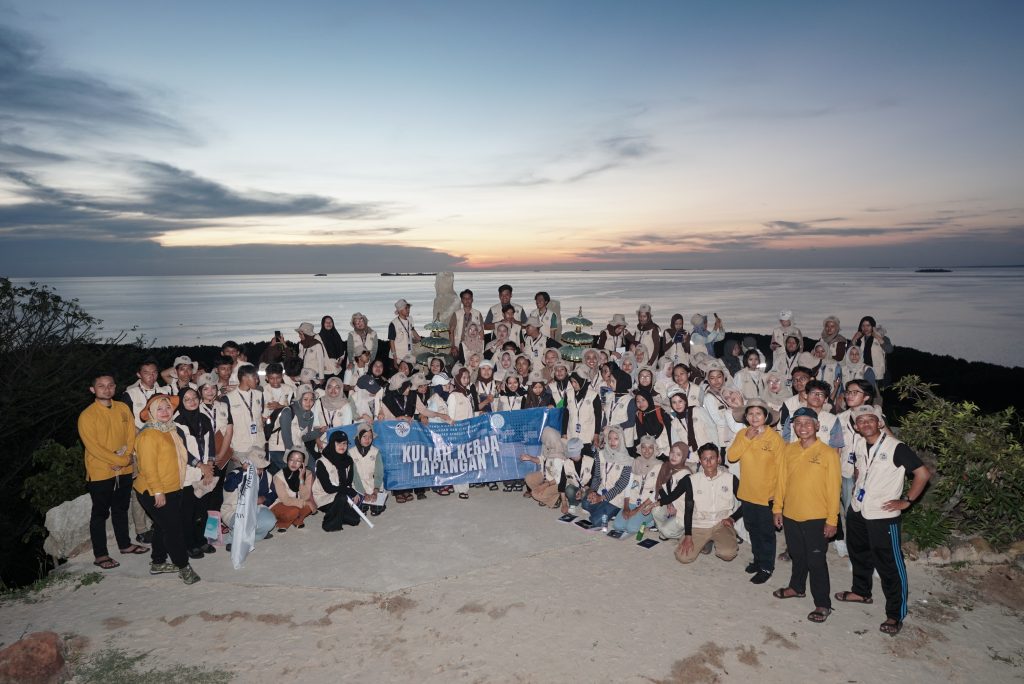
Each location is used as a space for discussion and study, allowing students to interact directly with the geographical and cultural phenomena they are learning about.
Through these activities, students are expected to not only understand theory, but also be able to apply it in real-life situations in their geography studies. In addition, it is hoped that these activities will increase students’ awareness of the importance of conserving and utilizing Indonesia’s landscape and culture.